Before You Go
What the journey is really like
The Danakil and northern Ethiopia are not ordinary sightseeing. Here is what to expect, honestly, so you arrive prepared rather than surprised.
Heat, remoteness, rough roads, basic camps and early starts are part of a Danakil expedition. None of them should frighten you, but all of them should be expected. This page explains each one, and what we do about it.
Heat
The Danakil is one of the hottest inhabited places on Earth. Even in the cooler months, November to January, expect significant heat.
We plan every day around it: early starts, the hottest hours spent resting in shade, and walking timed for evening or early morning. Drink before you feel thirsty.
Roads & 4×4 travel
A kilometre is not always just a kilometre. Remote Danakil tracks need 4×4 vehicles and drivers who know them, and some days are long overland transfers on rough, dusty ground.
We decide how a day runs from road condition, daylight, weather, the vehicle and local information. We would rather arrive later and safely than promise an unrealistic arrival time.
Walking
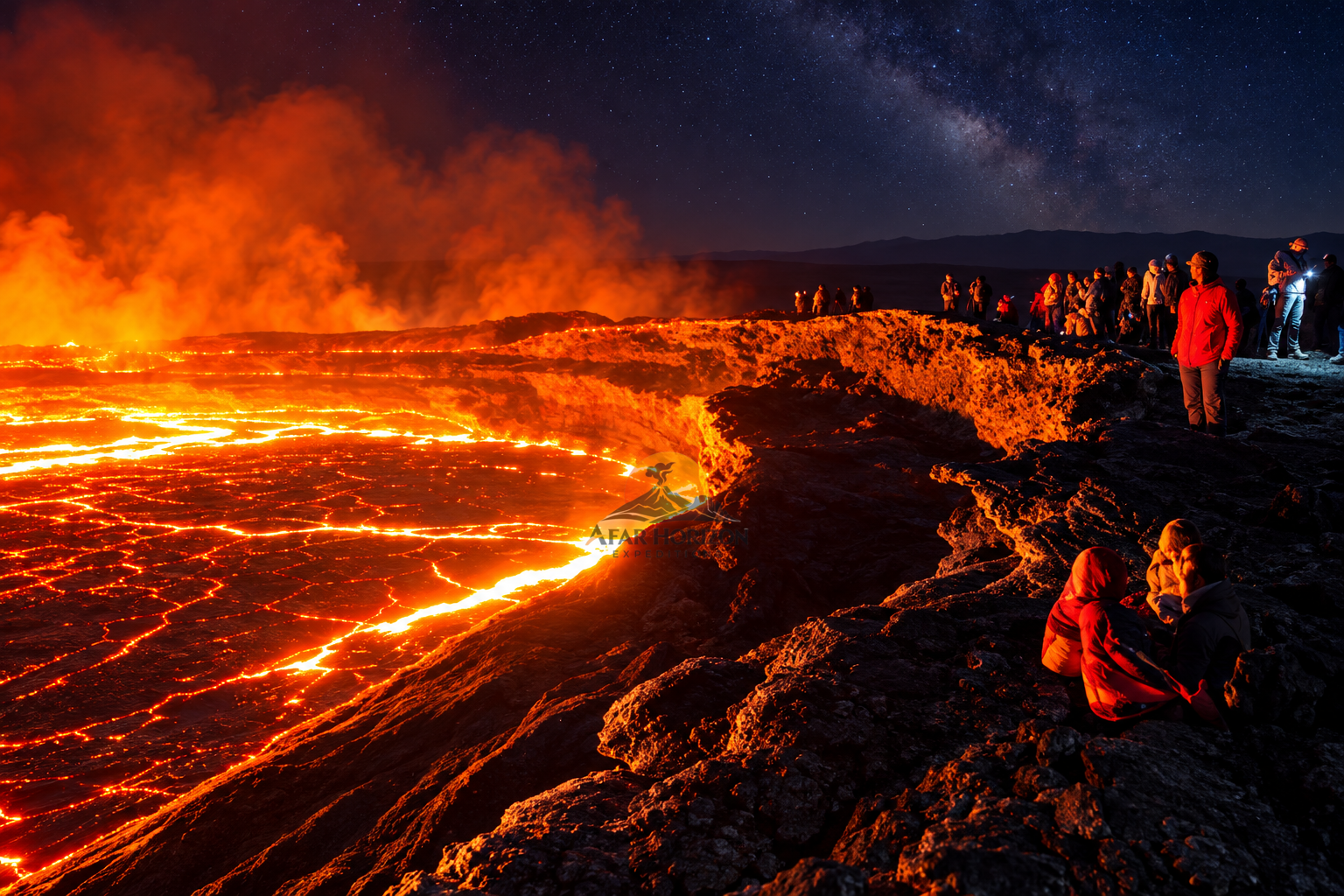
Most Danakil walking is short and easy, on uneven ground. The exception is Erta Ale: an approach of roughly 10 km across exposed volcanic terrain, done in the dark or at dawn. It is not technical, but you need reasonable fitness and sturdy shoes.
In Gheralta, some cliff churches involve steep, exposed climbs; easier options always exist. In the Simien, the challenge is altitude (up to 4,550 m) and cold rather than heat.
Accommodation & camping
We never describe Danakil camping as luxury. Remote camps can mean basic sleeping arrangements, often open-air at Hamed Ela, with limited washing facilities, limited electricity, simple toilets and outdoor meals.
That is not a failure of the trip; it is the nature of the place. In the highlands we choose hotels, lodges and guesthouses for location, cleanliness, reliability and the comfort level you ask for.
Food & water
Expedition meals are prepared by our team and planned around the logistics of the desert. We carry drinking water for the route and the group; bring your own bottle or hydration system as well.
Tell us about dietary requirements before departure so we can plan for them. In the highlands, try injera and a coffee ceremony; our guides will explain what you are eating.
Phones, internet & money
Expect little or no mobile signal in parts of the Danakil, and limited charging. Bring a power bank, spare batteries and cables.
Ethiopia is largely a cash environment outside the cities. Don’t rely on a single card or ATM; carry a sensible backup, and ask us before departure about payments on your route.
Safety & changing conditions
The Danakil is a remote expedition environment, and access in parts of Afar and Tigray can change. We check current conditions before we quote and again before departure, and we will change or cancel a route when conditions require it.
When something changes on the road, we understand what happened, verify the situation on the ground, explain what it means for you, offer realistic options, decide on the safest one, rebuild the logistics and keep you informed.
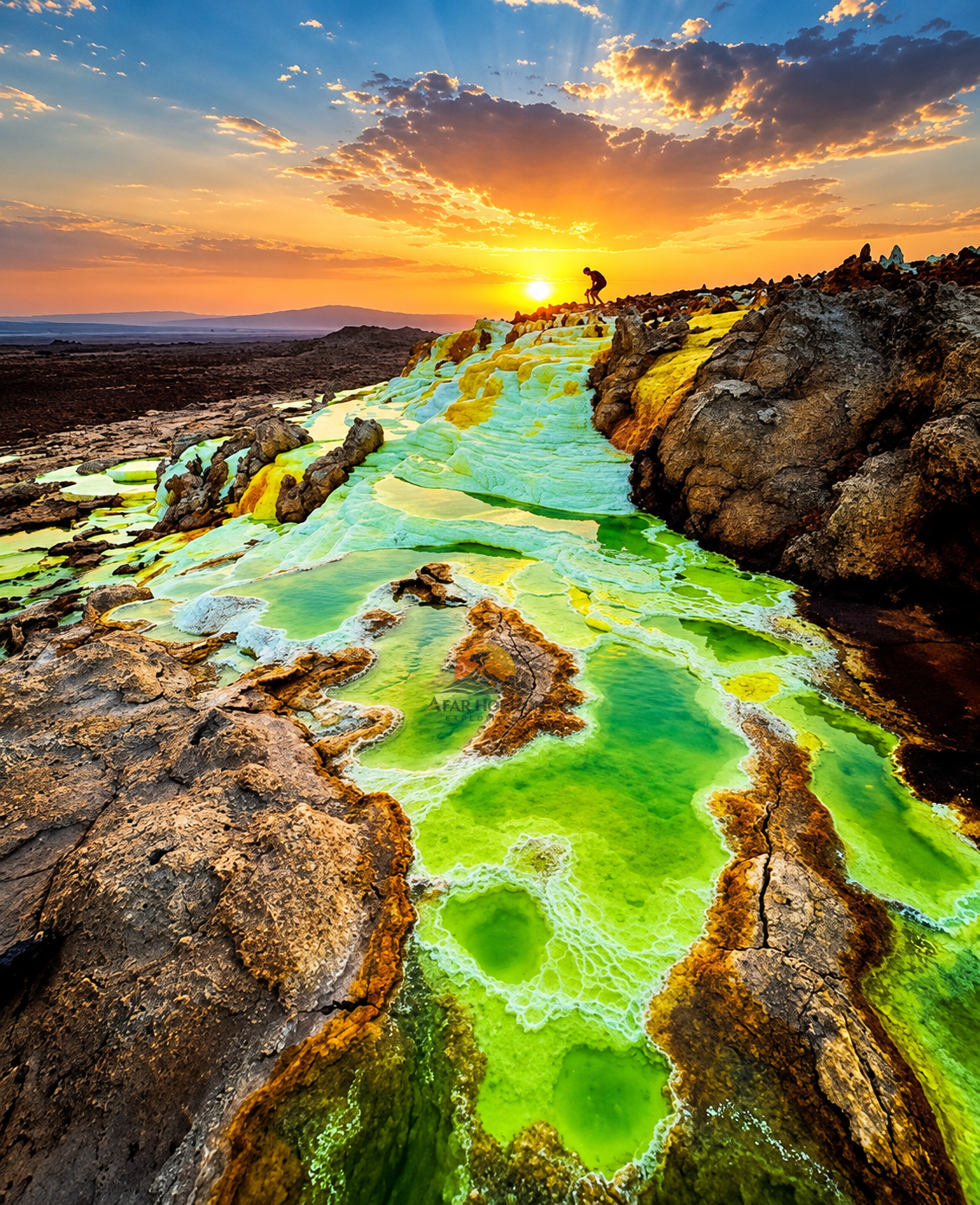
Volcanic activity at Erta Ale, camel caravans on the salt and access to Dallol are never guaranteed. We plan responsibly around the conditions we find.
Flexibility & early starts
Days often start before dawn. Exact timings, camp locations and routes are confirmed for your dates and can shift on the day.
Flexibility may be the most important thing you bring. A well-informed traveller who expects this enjoys the Danakil far more than one who expects a brochure.
Altitude or heat?
Ethiopia can challenge your body in opposite ways, sometimes within the same week. That is why we explain the demands of your specific route rather than using one difficulty rating.
- Danakil
- Heat, dehydration, rough roads and remote conditions. Low altitude.
- Simien
- Altitude, cold, walking and terrain. Variable weather.
What to pack for the Danakil
- Lightweight, breathable long-sleeved clothing
- Wide-brimmed hat and sunglasses
- Sunscreen and lip protection
- Sturdy walking shoes (and sandals for camp)
- A warm layer for cooler nights and the highlands
- Headlamp
- Reusable bottle or hydration system
- Power bank, spare batteries and cables
- Dust protection for phone and camera
- Wipes, hand sanitiser and a small towel
- Personal medication in original packaging
- Sleeping clothes and personal hygiene supplies
Most importantly: do not underestimate the heat. For medical advice, consult a qualified healthcare professional before you travel, and make sure your travel insurance covers remote areas.
Travel with respect
Photograph people, not at people. A good photograph should not require a bad experience for the person in front of your camera.
- Ask before photographing people, ceremonies and children (ask their guardian)
- Dress modestly at churches and follow the local church guide
- Do not treat people as scenery or interrupt work for a photograph
- Greet people, respect elders and accept hospitality graciously
- Buy locally where you can
- Listen to your guide: they explain the context
A few words help: Selam (hello), Amesegenallo (thank you).
Still have questions?
Read our FAQ, compare expeditions, or ask us about current conditions for your dates.
Speak With a Designer
Ask about current conditions
Tell us your dates and we will tell you honestly what is possible, what the route involves and what we would recommend.
Or call us directly on +251 956 61 6969